
GEOL 410 Field Geology – Six semester credits
Not offered in 2026
June 7 – July 9, 2027
Application Deadline: Dec. 31, 2026
Contact nuri.uzunlar@sdsmt.edu to be waitlisted.
Geology Field Camp
Six Semester Credits
June 7 - July 9, 2027
Spain
June 6, 2027 at 3:00 PM
Meet at Barcelona International Airport
July 10, 2027
Drive back to Barcelona
$6,895
$6,395 graduate
$300 is due at registration
Dec. 31, 2026
Limited to 18 students
No Camping
$6,895 (Includes tuition, all fees, accommodation, travel insurance, food and transportation from Barcelona). Airfare to Barcelona is not included and ranges from $1000 to $1500 depending of departure city. Deposit: $300 (required upon registration). BHNSFS reserves the right to cancel the camp if the minimum enrollment is not reached. The full deposit will be refunded or applied to another camp in this case, and applicants will be notified by email by March 31, 2027.
No camping. The session is limited to 18 students.
June 6, 3:00 PM – Meet at Barcelona International Airport (exact location will be mailed to participants in May, 2026)
July 10 –Drive back to Barcelona – Earliest you can fly out is 3:00 PM.
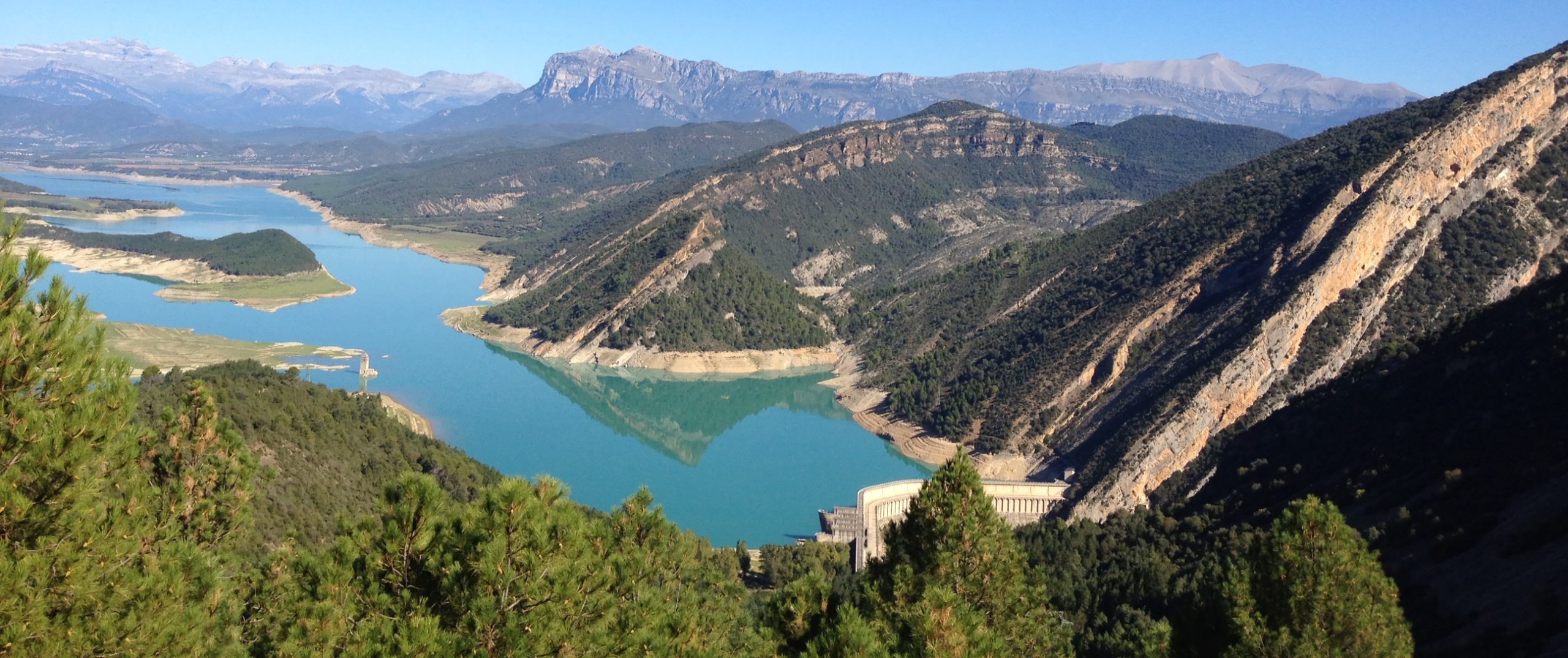
The Pyrenees form an east-west trending, 200 km wide, 1500 km long natural boundary between Spain and France that formed during the collision of the Iberian and European plates 50 – 29 mya. This 5-week field course emphasizes basic field techniques, geologic mapping, and cross-section construction in a variety of classic Pyrenean geological settings – Eocene deltaic deposition during the formation of synorogenic piggy-back basins, folded and faulted Mesozoic rocks of the southern foreland fold-and-thrust belt, and Hercynian/Variscan metamorphic nappes. Students will spend four weeks working in the central Pyrenees on progressively more complex stratigraphic and structural problems and the final week working in multiply deformed metamorphic rocks of the Pyrenean Axial Zone exposed along the Mediterranean Sea. Lectures will include lessons on basic field techniques but will also emphasize the tectonic evolution of the Pyrenees.
Students will spend the first couple of days learning basic field techniques including basic navigation, the use of the Brunton Compass, and how to measure stratigraphic sections. Emphasis will be placed on observational skills, recording field data, and basic geologic map construction. Students will learn techniques for measuring stratigraphic sections, collecting structural data in the field, cross-section construction, and simple structural analyses from field data. Students will also learn to synthesize their observations to construct an interpretation of the geologic history of the various field sites.
The students will investigate the synorogenic deposition and deformation of Eocene deltaic deposits. This project involves measuring and description of basic pro-delta depositional sequences, mapping of deltaic lobes, and syndepositional deformation of the deltas in the context of growing piggy-back basins.
Students will then map and examine larger scale structures involved in creating the piggy-back basins as the foreland fold-and-thrust belt developed.
Students will also map more complex field relationships involving the thrust emplacement of Variscan nappes involving igneous, metamorphic, and sedimentary rocks.
After a basic introduction to the metamorphic rocks of the Pyrenean Axial Zone, the final mapping project will involve detailed mapping of multiply deformed, amphibolite-facies, metamorphic and intrusive rocks.
These projects are designed to build upon each other ultimately giving the students an overall understanding of the tectonic architecture of the Pyrenees.
Geologic Field Techniques (1st edition) edited by Angela Coe;
ISBN-13: 978-1444330625
A more detailed list will be provided after you sign up for camp.
Dr. Joseph Hill, Spain Camp Coordinator
Associate Professor
Department of Geography and Geology
Sam Houston State University
Office Phone: (936) 294-1560
Dr. Nuri Uzunlar, Director, Black Hills Natural Sciences Field Station
Professor, Geology and Geological Engineering Department
South Dakota School of Mines and Technology
Office Phone: (605) 394 – 2494 ; Cell: (605) 431-1275